lab2 practice - Preuves
Captures et plans d’execution generes lors du lab.
Captures d’ecran
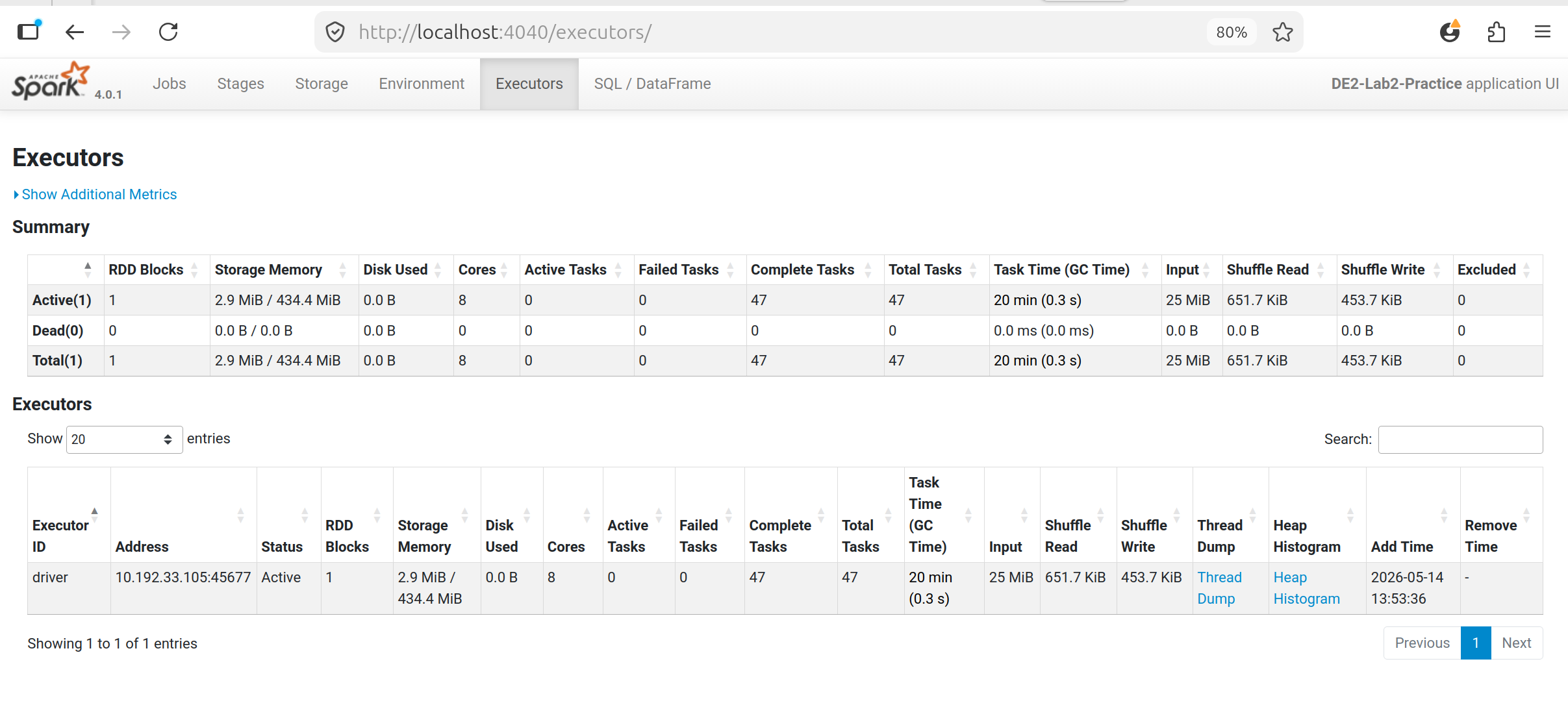
Executors
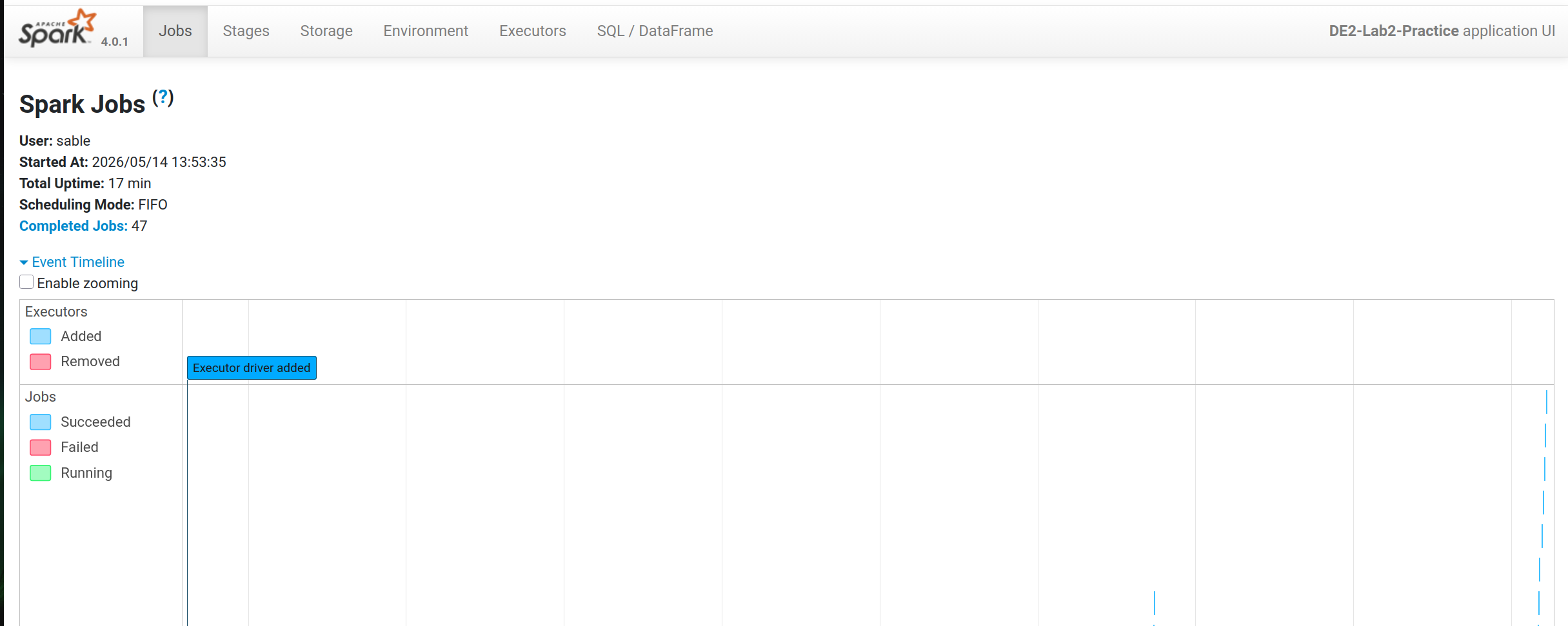
JObs
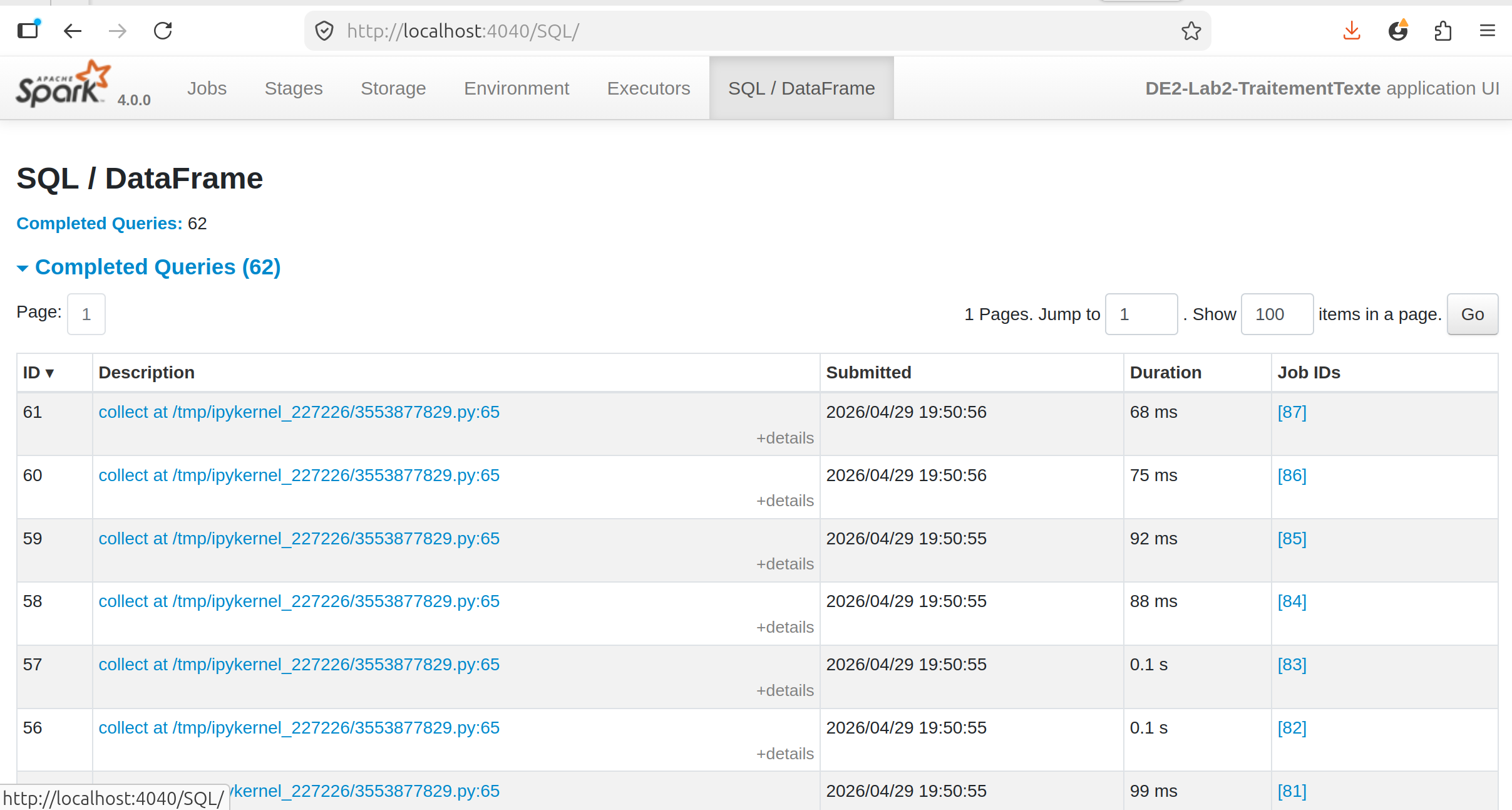
SQL
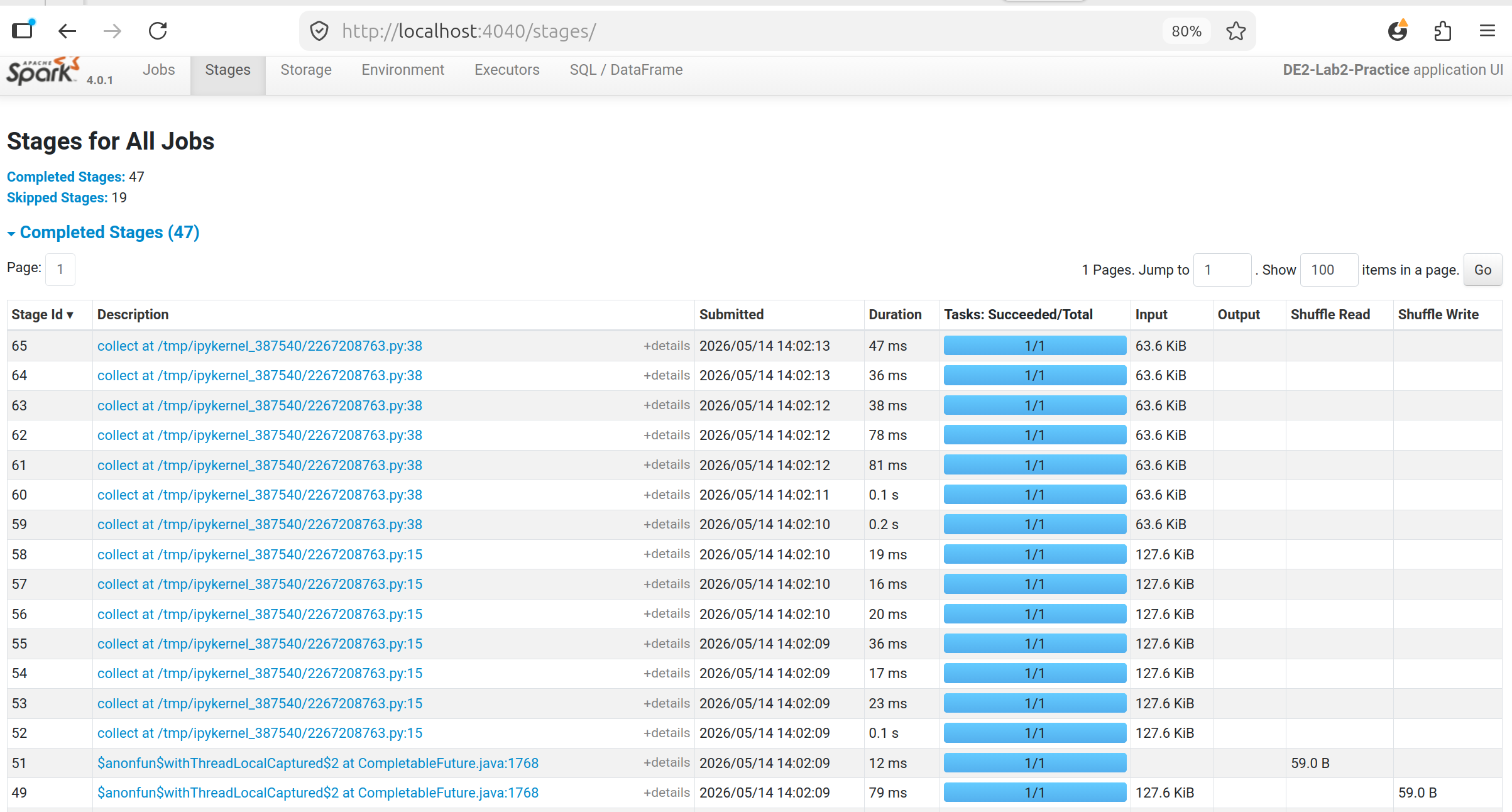
Stages
Plans et logs
plan_index_build.txt
== Physical Plan ==
AdaptiveSparkPlan (11)
+- Sort (10)
   +- Exchange (9)
      +- ObjectHashAggregate (8)
         +- Exchange (7)
            +- ObjectHashAggregate (6)
               +- Filter (5)
                  +- Generate (4)
                     +- Project (3)
                        +- Filter (2)
                           +- Scan json  (1)


(1) Scan json
Output [4]: [id#0, type#1, repo#2, actor#3]
Batched: false
Location: InMemoryFileIndex [file:/home/sable/Documents/E4FD/S4/Data Engineering/sample_archive_github.json]
ReadSchema: struct<id:string,type:string,repo:struct<name:string>,actor:struct<login:string>>

(2) Filter
Input [4]: [id#0, type#1, repo#2, actor#3]
Condition : (size(split(lower(regexp_replace(concat_ws( , type#1, repo#2.name, actor#3.login), [^a-zA-Z0-9\s], , 1)), \s+, -1), false) > 0)

(3) Project
Output [2]: [id#0 AS doc_id#4, split(lower(regexp_replace(concat_ws( , type#1, repo#2.name, actor#3.login), [^a-zA-Z0-9\s], , 1)), \s+, -1) AS tokens#75]
Input [4]: [id#0, type#1, repo#2, actor#3]

(4) Generate
Input [2]: [doc_id#4, tokens#75]
Arguments: explode(tokens#75), [doc_id#4], false, [token#88]

(5) Filter
Input [2]: [doc_id#4, token#88]
Condition : (NOT (token#88 = ) AND NOT token#88 INSET a, an, and, are, as, at, be, been, being, but, by, can, could, did, do, does, for, from, had, has, have, how, in, is, it, may, might, of, on, or, should, that, the, this, to, was, were, what, when, where, which, who, why, will, with, would)

(6) ObjectHashAggregate
Input [2]: [doc_id#4, token#88]
Keys [1]: [token#88]
Functions [2]: [partial_collect_list(doc_id#4, 0, 0), partial_count(1)]
Aggregate Attributes [2]: [buf#128, count#129L]
Results [3]: [token#88, buf#130, count#131L]

(7) Exchange
Input [3]: [token#88, buf#130, count#131L]
Arguments: hashpartitioning(token#88, 200), ENSURE_REQUIREMENTS, [plan_id=1101]

(8) ObjectHashAggregate
Input [3]: [token#88, buf#130, count#131L]
Keys [1]: [token#88]
Functions [2]: [collect_list(doc_id#4, 0, 0), count(1)]
Aggregate Attributes [2]: [collect_list(doc_id#4, 0, 0)#114, count(1)#113L]
Results [3]: [token#88, collect_list(doc_id#4, 0, 0)#114 AS doc_ids#109, count(1)#113L AS freq#110L]

(9) Exchange
Input [3]: [token#88, doc_ids#109, freq#110L]
Arguments: rangepartitioning(freq#110L DESC NULLS LAST, 200), ENSURE_REQUIREMENTS, [plan_id=1104]

(10) Sort
Input [3]: [token#88, doc_ids#109, freq#110L]
Arguments: [freq#110L DESC NULLS LAST], true, 0

(11) AdaptiveSparkPlan
Output [3]: [token#88, doc_ids#109, freq#110L]
Arguments: isFinalPlan=false
plan_query.txt
== Physical Plan ==
* Filter (5)
+- InMemoryTableScan (1)
      +- InMemoryRelation (2)
            +- * ColumnarToRow (4)
               +- Scan parquet  (3)


(1) InMemoryTableScan
Output [3]: [token#194, doc_ids#195, freq#196L]
Arguments: [token#194, doc_ids#195, freq#196L], [isnotnull(token#194), (token#194 = pushevent)]

(2) InMemoryRelation
Arguments: [token#194, doc_ids#195, freq#196L], StorageLevel(disk, memory, deserialized, 1 replicas)

(3) Scan parquet
Output [3]: [token#194, doc_ids#195, freq#196L]
Batched: true
Location: InMemoryFileIndex [file:/home/sable/Documents/E4FD/S4/Data Engineering/Data Engineering 2/lab2 practice/outputs/lab2/inverted_index]
ReadSchema: struct<token:string,doc_ids:array<string>,freq:bigint>

(4) ColumnarToRow [codegen id : 1]
Input [3]: [token#194, doc_ids#195, freq#196L]

(5) Filter [codegen id : 1]
Input [3]: [token#194, doc_ids#195, freq#196L]
Condition : (isnotnull(token#194) AND (token#194 = pushevent))